
Types of Marble Used in Buildings and Their Applications
Marble selection in buildings is rarely about color alone. Architects choose specific types of marble based on structural behavior, finish response, durability, and how the stone performs in different architectural conditions. Using the wrong marble in the wrong application often leads to premature wear, maintenance challenges, and compromised design intent.
Understanding the different types of marble used in buildings allows architects to make informed material decisions. Each variety has distinct characteristics that influence where and how it should be applied. This article outlines commonly used marble types in architecture and explains their practical applications within buildings.
1. White Marble in Architectural Spaces
White marble is frequently used in buildings where brightness and spatial clarity are priorities. Its reflective quality helps enhance natural and artificial light, making it suitable for interiors that require visual openness.
Common applications:
- Entrance lobbies and reception areas
- Feature walls and accent surfaces
- Low-traffic flooring in residential or institutional buildings
White marble works best in honed or matte finishes in circulation areas to reduce glare and surface wear.
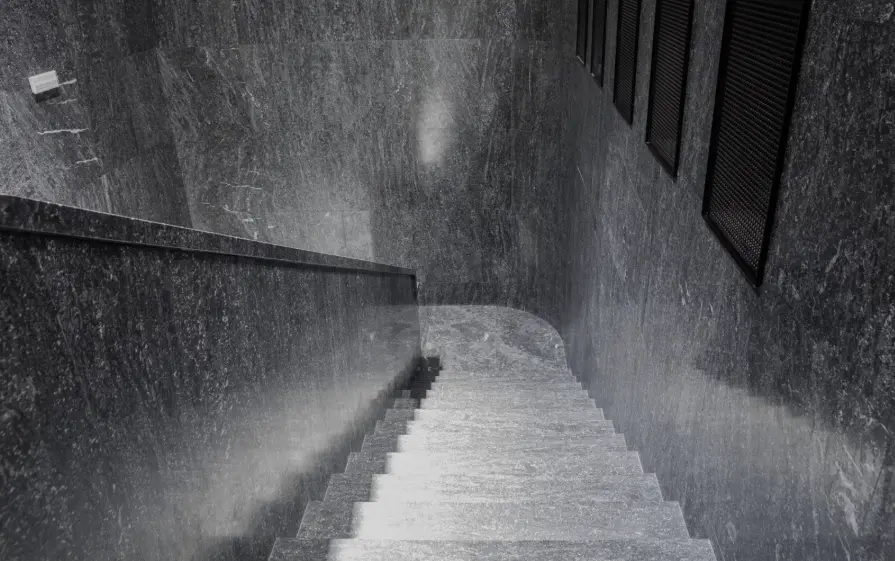
2. Grey Marble for Contemporary Architecture
Grey marble is often chosen for modern buildings due to its neutrality and compatibility with minimal design language. It offers visual depth without overpowering surrounding materials.
Architectural uses include:
- Large-format flooring
- Wall cladding in commercial interiors
- Staircases and vertical planes
Grey marble performs well in both polished and honed finishes, depending on lighting and foot traffic.
3. Beige and Cream Marble in Transitional Spaces
Beige and cream marbles are commonly used in buildings where warmth and continuity are required. These stones blend easily with wood, metal, and neutral finishes.
Typical applications:
- Corridors and transition zones
- Hospitality interiors
- Residential common areas
Their forgiving tone helps mask minor wear, making them suitable for moderate-traffic environments.
4. Dark Marble as a Feature Material
Dark marbles are rarely used extensively but are effective when applied strategically. Their visual weight makes them ideal for creating contrast and emphasis.
Architectural applications:
- Feature walls
- Reception desks and counters
- Highlight elements in large spaces
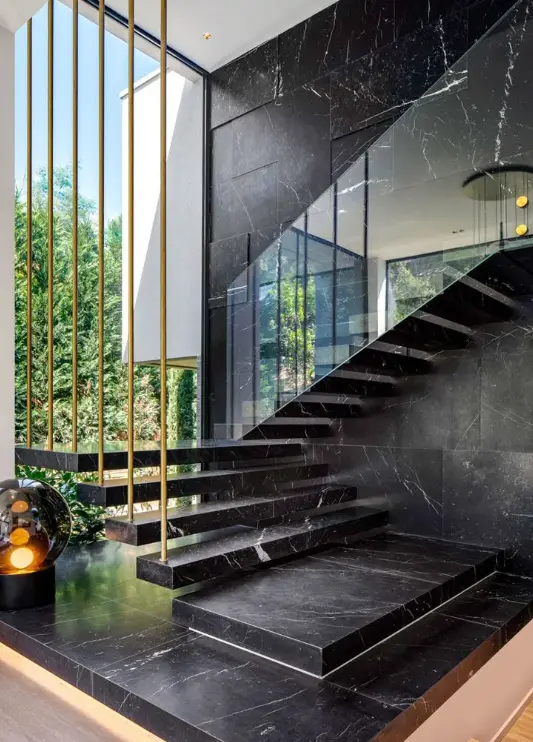
Controlled lighting and limited coverage are essential when using dark marble in buildings.
5. Imported vs Domestic Marble in Buildings
Architects often evaluate both imported and domestic marbles based on availability, consistency, and project timelines. Imported marbles may offer distinctive veining, while domestic stones are often easier to source and replace.
The choice depends on:
- Project scale and budget
- Replacement feasibility
- Desired visual consistency
Material origin is secondary to performance and application suitability.
Conclusion
Different types of marble serve different architectural purposes. Selecting marble based on its behavior, finish compatibility, and intended application ensures that it supports both design intent and long-term performance. In building design, informed material selection is as important as form and function.