
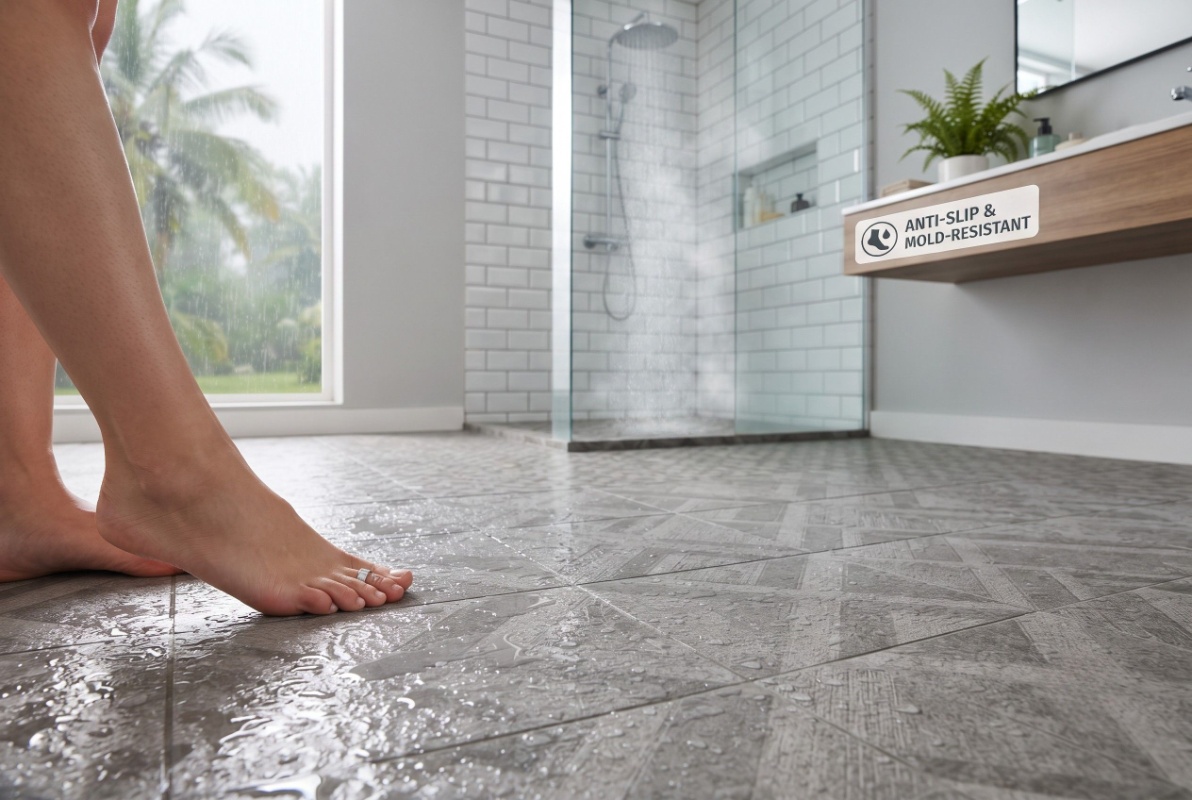
Best Bathroom Tiles for Monsoon: Mold & Slip-Proof
The bathroom is already the most moisture-exposed room in any home — and during the monsoon, that exposure only increases. Higher ambient humidity means floors and walls take longer to dry, grout stays damp for extended periods, and the conditions that let mold and mildew take hold become far more common. Add a wet, slippery floor to the mix, and monsoon season turns an everyday bathroom into a genuine safety concern.
The right tile choice can prevent most of these problems before they start. Here's what actually matters when choosing bathroom tiles built to handle monsoon humidity.
Why Bathrooms Are a Mold Hotspot During Monsoon
Mold and mildew thrive in damp environments where moisture lingers rather than drying quickly. In the monsoon, when indoor humidity is already elevated, that "drying window" shrinks — showers stay wet longer, grout lines absorb more ambient moisture, and even well-ventilated bathrooms can struggle to fully dry between uses. This is exactly the environment where porous tiles and low-quality grout start to show problems: staining, dark spots in grout lines, and musty odours that don't go away with a quick wipe-down.
What to Look for in Monsoon-Ready Bathroom Tiles
1. Low Porosity Materials
Porcelain and ceramic tiles are dense, fired at high temperatures to create a tightly sealed surface that resists moisture penetration far better than porous natural stone. Because they don't easily absorb water, they give mold and mildew far less opportunity to take hold beneath the surface.
2. Non-Porous or Antimicrobial Glazes
Some tile ranges now include antimicrobial glazes engineered specifically to inhibit bacterial and mold growth on the surface. This added protective layer doesn't change the tile's appearance, but it does help maintain a cleaner surface between regular cleanings — a meaningful advantage during months of sustained humidity.
3. The Right Grout Matters Just as Much as the Tile
Even the best tile can develop mold problems if paired with the wrong grout. Standard cement-based grout is porous and prone to trapping moisture over time, while epoxy grout is non-porous and significantly more resistant to water absorption, staining, and mold growth. For monsoon-heavy regions, upgrading grout choice is often as important as the tile itself.
4. Slip Resistance
A bathroom floor that's mold-resistant but slippery is still a hazard. Textured or matte-finish tiles provide meaningfully better grip underfoot than glossy, polished surfaces — particularly important in shower areas and around wet zones near the tub or sink. Choosing anti-skid finishes doesn't mean sacrificing style; textured finishes are available across a wide range of colors and looks.
5. Minimal Grout Lines
Larger format tiles or well-planned layouts reduce the total length of grout joints in a bathroom — and fewer joints mean fewer places for moisture, soap scum, and mildew to accumulate over time.
Simple Habits That Help Any Tile Perform Better
Even the best monsoon-ready tile benefits from a few basic habits:
- Run the exhaust fan during and after showers to clear damp air faster
- Squeegee shower walls and floors after use to reduce standing moisture
- Inspect grout periodically for cracks and reseal it as needed, especially before monsoon sets in
- Clean with pH-neutral, mild anti-mold cleaners rather than harsh abrasives that can wear down glazes over time
Best Tile Choices for Monsoon Bathrooms
- Porcelain tiles — Low water absorption, dense structure, and available in matte or textured finishes ideal for both floors and walls.
- Vitrified tiles — Extremely low porosity, strong performance in sustained humidity, and widely available in anti-skid variants.
- Tiles with antimicrobial glaze — An added layer of protection for households in especially humid or coastal regions.
- Textured or matte-finish tiles — Essential for shower floors and wet zones where slip risk is highest.
Avoid highly porous materials like unsealed natural stone or terracotta in shower and wet areas, since these require far more frequent sealing and maintenance to stay mold-free during monsoon months.
Manoj Ceramic's Bathroom Tile Collections
At Manoj Ceramic Limited, our porcelain and vitrified bathroom tile ranges are designed with low water absorption and anti-skid textured finishes to handle India's monsoon humidity without compromising on style. From compact apartment bathrooms to larger en-suites, our collections are built to stay safe, clean, and mold-resistant through the toughest rainy seasons.
Renovating your bathroom before monsoon hits? Explore Manoj Ceramic's anti-skid and low-porosity tile collections, or visit our Design Studio to preview how different finishes will look in your own bathroom before you decide.