
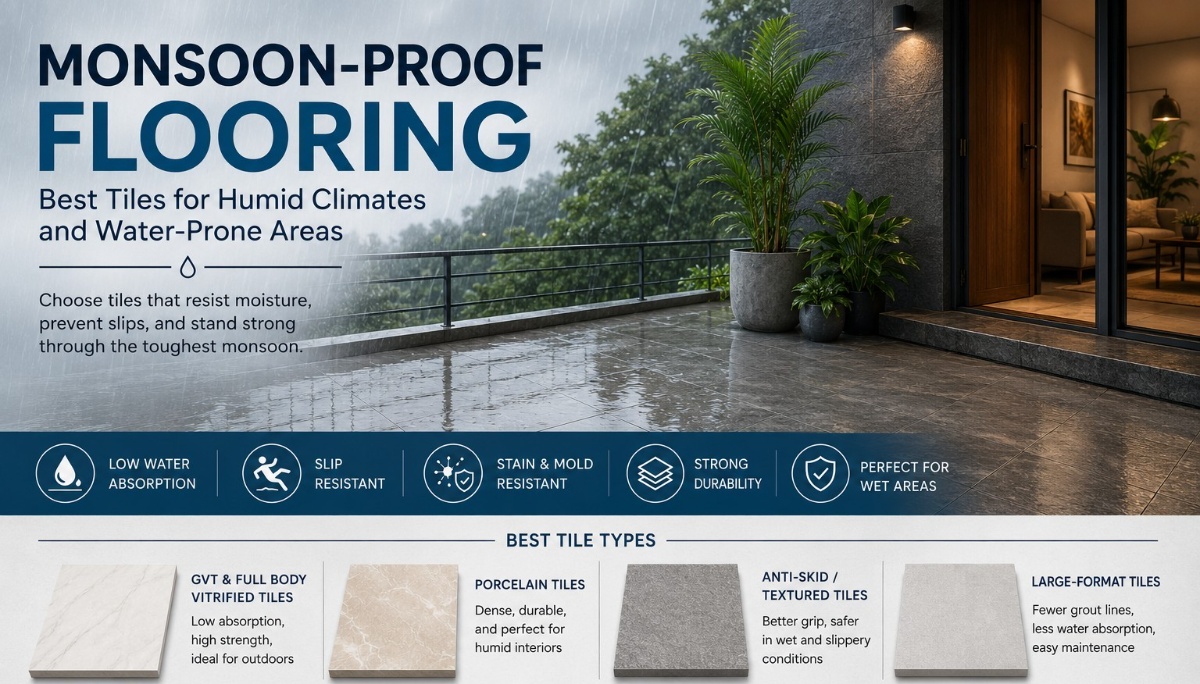
Monsoon-Proof Flooring: Best Tiles for Humid Climates and Water-Prone Areas
Every monsoon season, the same problems show up in homes across India: slippery floors, damp patches, musty odours, grout that starts staining, and in the worst cases, tiles that debond or crack after months of trapped moisture underneath. None of this is inevitable — it almost always comes down to choosing the wrong flooring for a wet, humid climate.
At Manoj Ceramic Limited, monsoon-readiness is one of the most common questions we get from customers building or renovating homes in high-rainfall and coastal regions. Here's what actually matters when choosing tiles that can handle the rains — and keep performing long after the season ends.
Why Ordinary Flooring Fails in the Monsoon
Solid wood flooring expands and contracts with moisture, often leading to swelling, warping, and cracks over time. Carpets trap dampness, leading to odour and mildew. Even some flooring materials that look fine in a showroom can start showing seepage stains, slippery surfaces, or grout damage within a couple of monsoons if they weren't built for sustained humidity and water exposure.
The core issue is water absorption. Materials that soak up moisture — even in small amounts — are far more likely to develop long-term problems in wet climates than materials engineered to stay dense and non-porous.
What Makes a Tile Truly Monsoon-Proof
1. Low Water Absorption
This is the single most important factor. Vitrified and porcelain tiles are dense, low-porosity materials that resist moisture penetration far better than natural stone or untreated ceramic. Glazed vitrified tiles (GVT) and full-body vitrified tiles offer some of the lowest water absorption rates available, making them a strong choice for both indoor and outdoor monsoon-prone areas. Porcelain tiles also perform well, particularly for interior spaces.
2. Slip Resistance
Wet floors are a safety hazard, especially in entryways, balconies, bathrooms, and ground-floor living areas. Textured or matte-finish tiles provide far better grip underfoot than polished, glossy surfaces, which become dangerously slick when wet. For outdoor or semi-outdoor areas like terraces and pool surrounds, higher slip-resistance ratings are worth prioritizing.
3. Stain and Mold Resistance
Constant humidity creates ideal conditions for mold, mildew, and staining — particularly in grout lines. Tiles with strong stain-resistance ratings, combined with regular grout sealing, help prevent the white powdery deposits (efflorescence) and dark mold spots that are common in poorly protected monsoon flooring.
4. Proper Adhesive and Installation
Even the best tile will fail if it's installed with the wrong adhesive. Standard cement mortar tends to lose bonding strength under repeated wet-dry cycles. Flexible, polymer-modified, water-resistant adhesives are essential for long-term durability in high-humidity regions — especially for bathrooms, balconies, and outdoor cladding.
5. Finish Matters as Much as Material
Matte, textured, and anti-skid finishes outperform glossy finishes in monsoon conditions, both for safety and for hiding water spots and daily wear. For outdoor or terrace applications, textured finishes designed specifically for rain exposure offer better long-term performance than standard indoor tile finishes.
Best Tile Types for Monsoon-Prone and Humid Areas
- Glazed Vitrified Tiles (GVT) & Full Body Vitrified Tiles — Extremely low water absorption, strong performance in both heavy rain and heat, ideal for outdoor and semi-outdoor spaces like terraces and balconies.
- Porcelain Tiles — Dense, low-absorption, and available in a wide range of finishes — a reliable all-round choice for interiors in humid climates.
- Anti-Skid / Textured Tiles — Essential for entrances, bathrooms, balconies, and ground-floor areas where wet footwear and standing water are common.
- Large-Format Tiles — Fewer grout lines mean fewer places for water, dirt, and mold to accumulate — a practical advantage during long rainy seasons.
- Region-Specific Considerations
India's monsoon intensity and duration vary significantly by region, and flooring choices should reflect that:
- Coastal and high-rainfall regions (Kerala, coastal Maharashtra, Konkan belt): Prioritize GVT or porcelain with strong anti-skid ratings, especially for ground floors and outdoor areas.
- Northeast and East India: Persistent humidity calls for tiles with excellent mold and stain resistance, paired with well-sealed grout.
- Metro and urban homes: Balconies, entryways, and utility areas typically see the most water exposure — these are the priority zones for monsoon-ready tiles, even if the rest of the home uses standard flooring.
Manoj Ceramic's Monsoon-Ready Collections
At Manoj Ceramic Limited, our vitrified and porcelain tile ranges are engineered with low water absorption, strong slip resistance, and durable finishes designed to perform through India's toughest monsoon seasons — without compromising on the look you want for your home.
Whether you're flooring a coastal home, an urban apartment balcony, or a commercial entryway that sees heavy foot traffic during the rains, choosing the right tile now saves you from costly repairs and replacements later.
Getting your home monsoon-ready? Explore Manoj Ceramic's vitrified and anti-skid tile collections, or visit our Design Studio to preview how these finishes will look in your own space before you order.